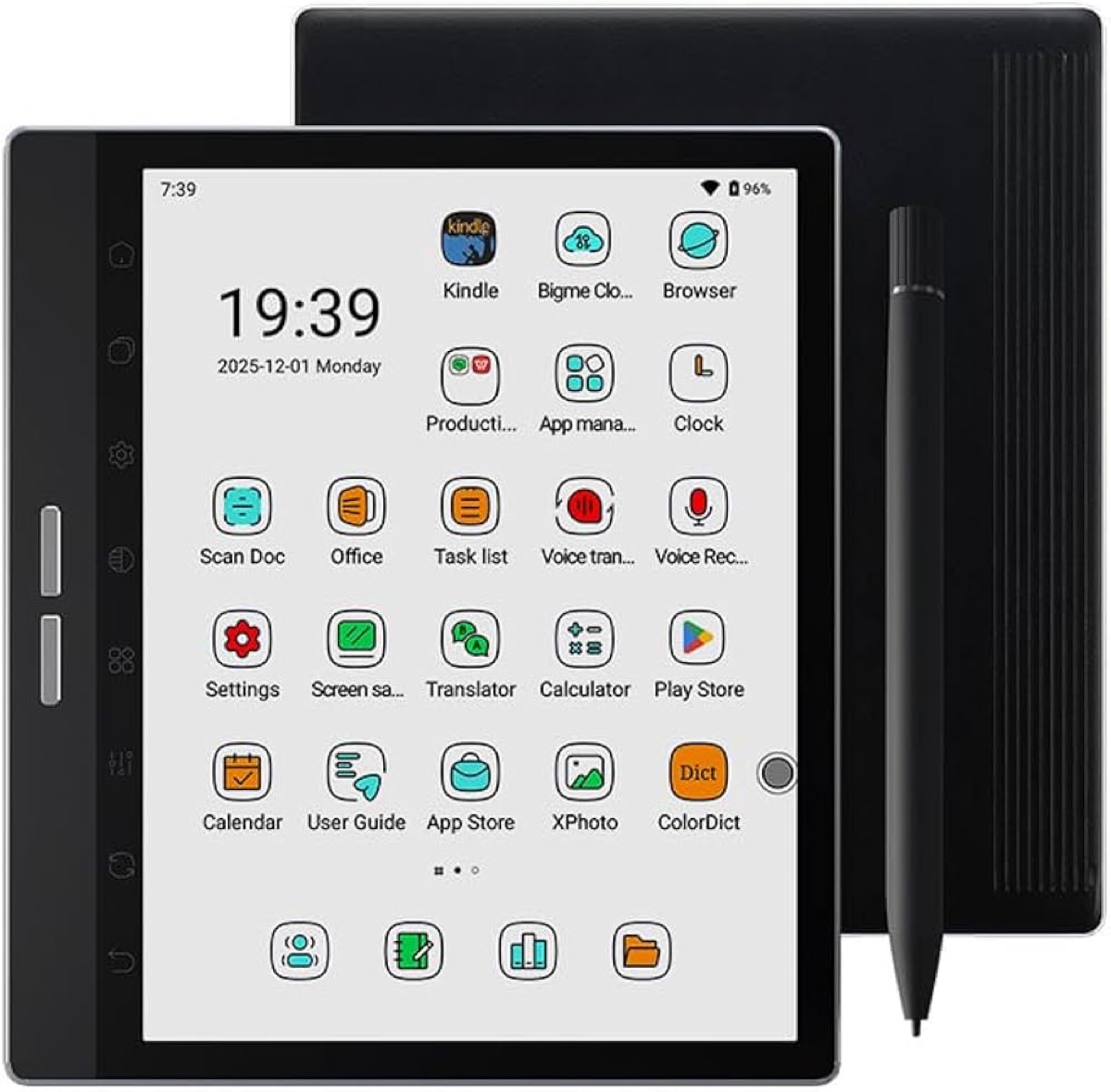
Screens, Done Well
If there's going to be a screen — the honest way to do it.
The real work of these years is play, talk, movement and the outdoors — not a screen. But most children end up in front of one sometimes, so this is the honest position: which few tools genuinely teach, what's gentle enough to watch, and — more than either — how a screen is used, which matters more than most people realise.
🔎 The honest position on screens ▾
Most of what a young child needs comes from play, talk, movement and the real world — not a screen. Bright, fast, rewarding apps and videos train a child to want exactly that: more bright, more fast, more reward. That's the overstimulation problem, and it's real.
But there's a narrow, honest exception. A little calm, focused academic practice — letters, numbers, phonics — can genuinely help, if the tool is well-made and the device isn't feeding the dopamine hit.
That's why the recommendation here is an E-ink tablet for apps, and a projector on the wall for watching. Both do the same thing: take the glossy, close, agitating glow out of it. The child gets the good part without the overstimulation. Same content, a very different effect on a small nervous system.
Programmes like Alpha School (and the wider "future of education" world) show the model worth stealing: a short daily block of focused, adaptive academic work — often well under two hours — that frees the rest of the day for real life, projects and play. The lesson isn't "more screen"; it's that a small, sharp dose of the right tool does the job quickly, so the screen serves the childhood instead of eating it.
A short, growing list of the few that earn their screen time — more added as we test them.
Use an E-ink tablet, not a glossy one
A little calm academic practice can genuinely help — but the device matters more than the app. A matte, paper-like E-ink tablet has no glow, no glare and none of the pull of a bright backlit screen, so a child gets the letters-and-numbers practice without the overstimulation. Same app, a very different effect on a small nervous system — and the single biggest lever for keeping screen time on the right side of the line.
Using it well
Less is better and none is fine — but if they do watch, what and how matter most.
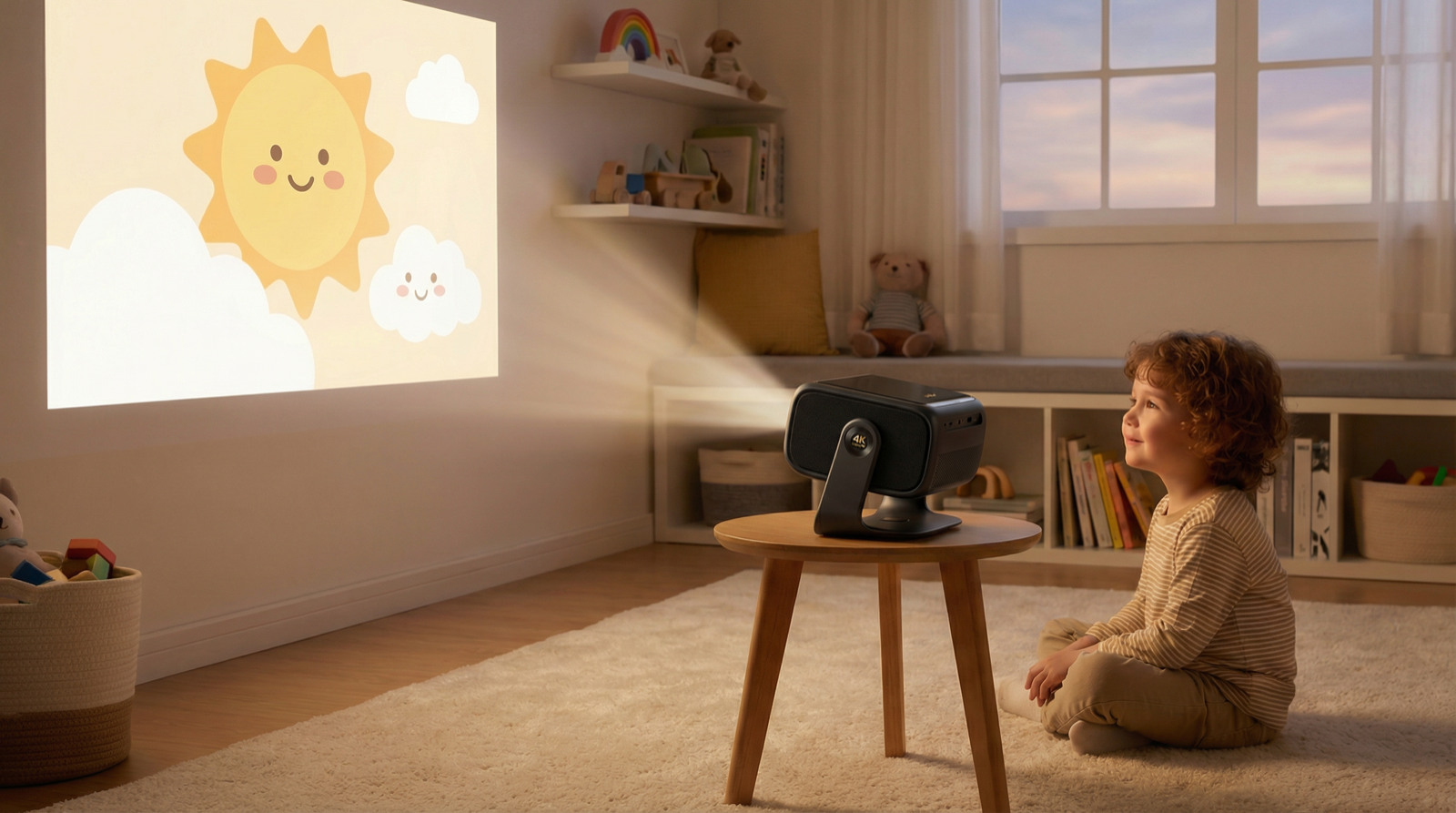
Put it on the wall, not in their hands
If they're watching, use a projector on a wall — not a tablet in their hands. Up close on a glossy screen a child's eyes stay locked at one short distance in a pool of bright light — the fixed near-focus tied to short-sightedness, and the glare winds them up. On a big, distant wall their eyes range and refocus the way eyes are meant to; they can stand back, move, even play while it's on; and everyone watches together, facing the same way. Same show, a completely different thing for a small body.
Gentle picks to start — slow, kind, not toxic.